
Multi-Camera Interview Production in Copenhagen for SaaS, Legal and MedTech
The thing that makes an expert interview watchable is not the camera. It is having a second one.
A single-camera interview locks you into one frame. Every time the edit needs to tighten an answer, you get a jump cut, a clumsy dissolve or a slab of B-roll dropped over the top to hide the join. A second angle removes the problem entirely — you cut between frames and nobody sees the seam.
That is most of why serious interview content is shot multi-camera. This is what a multi-camera interview day in Copenhagen actually involves, what comes out of it, and what changes when your subject is a SaaS founder, a partner at a law firm or a specialist in a regulated medtech environment.
The short version
- A second camera exists so the edit can cut answers invisibly — it is an editorial decision, not a vanity one
- Bad audio kills an interview film faster than bad picture ever will
- One well-run interview day typically yields a hero film, several cutdowns, quote cards and stills
- Regulated environments change the plan more than the kit — plan approvals before the shoot date
- Your team does not need to be in Copenhagen for us to film here
Why two cameras, and when a third earns its place
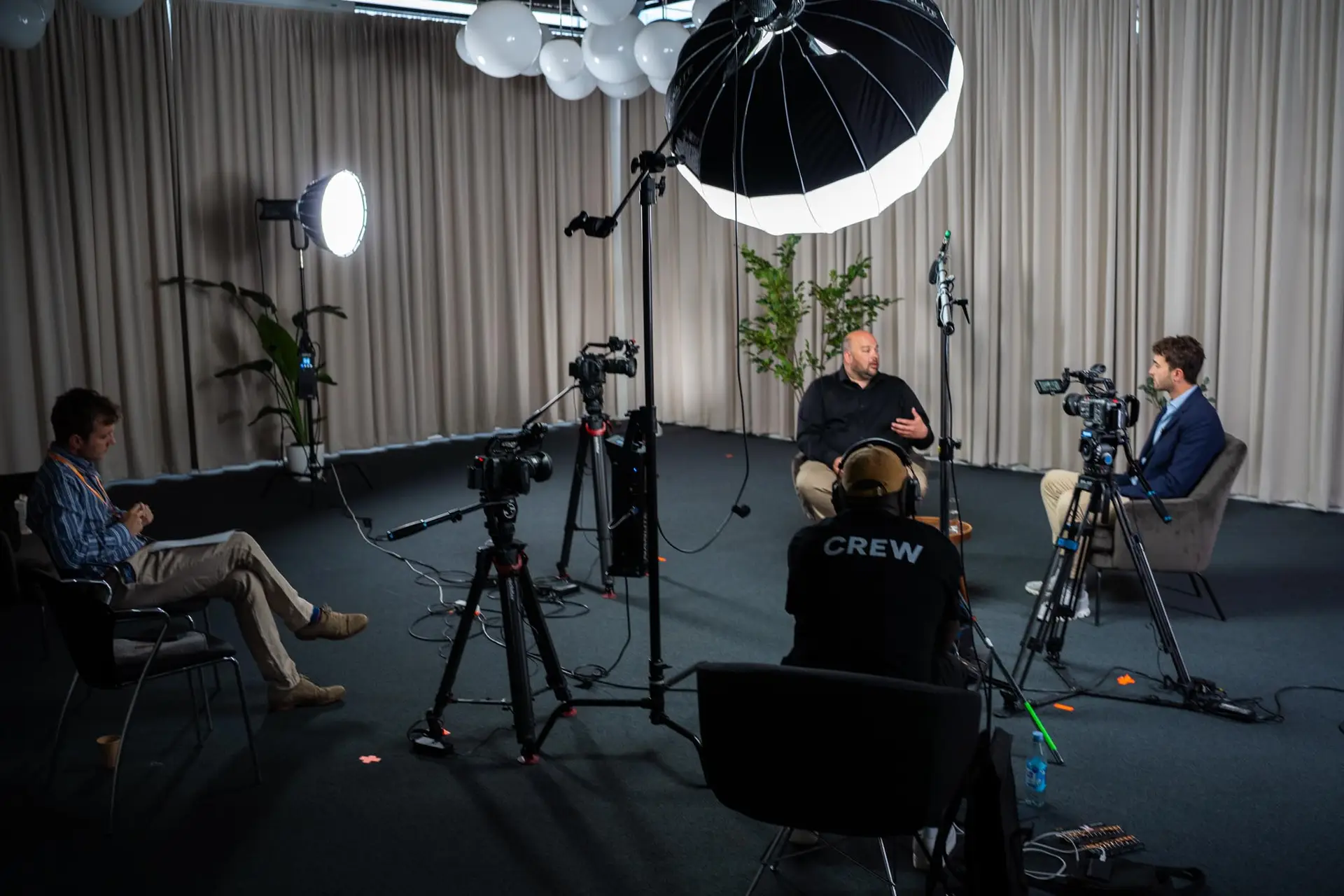
The standard setup is a wide or mid on the subject and a tighter frame from a slightly different angle. The wide establishes the room and the person. The tight carries the moments that matter. Cutting between them lets an editor compress a rambling four-minute answer into a tight ninety seconds without a single visible jump.
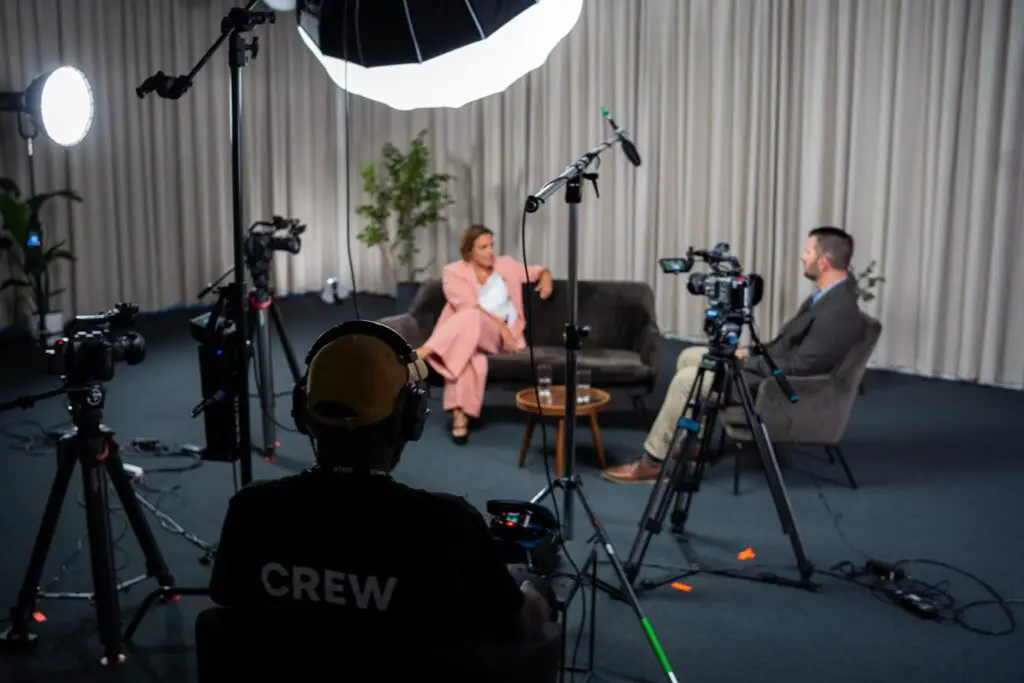
A third camera earns its place in three situations: when there are two people in conversation and each needs their own frame; when you want a detail angle on hands, a screen or a product; and when the subject is only available once and there will be no second attempt.
Beyond that, more cameras mostly add setup time and footage to sort through. Two well-placed angles beat four badly lit ones.
Audio is the thing that actually ruins interviews
People forgive a soft image. Nobody finishes a video where the speaker sounds like they are in a stairwell. In practice, most of what goes wrong on corporate interview shoots is acoustic rather than visual.
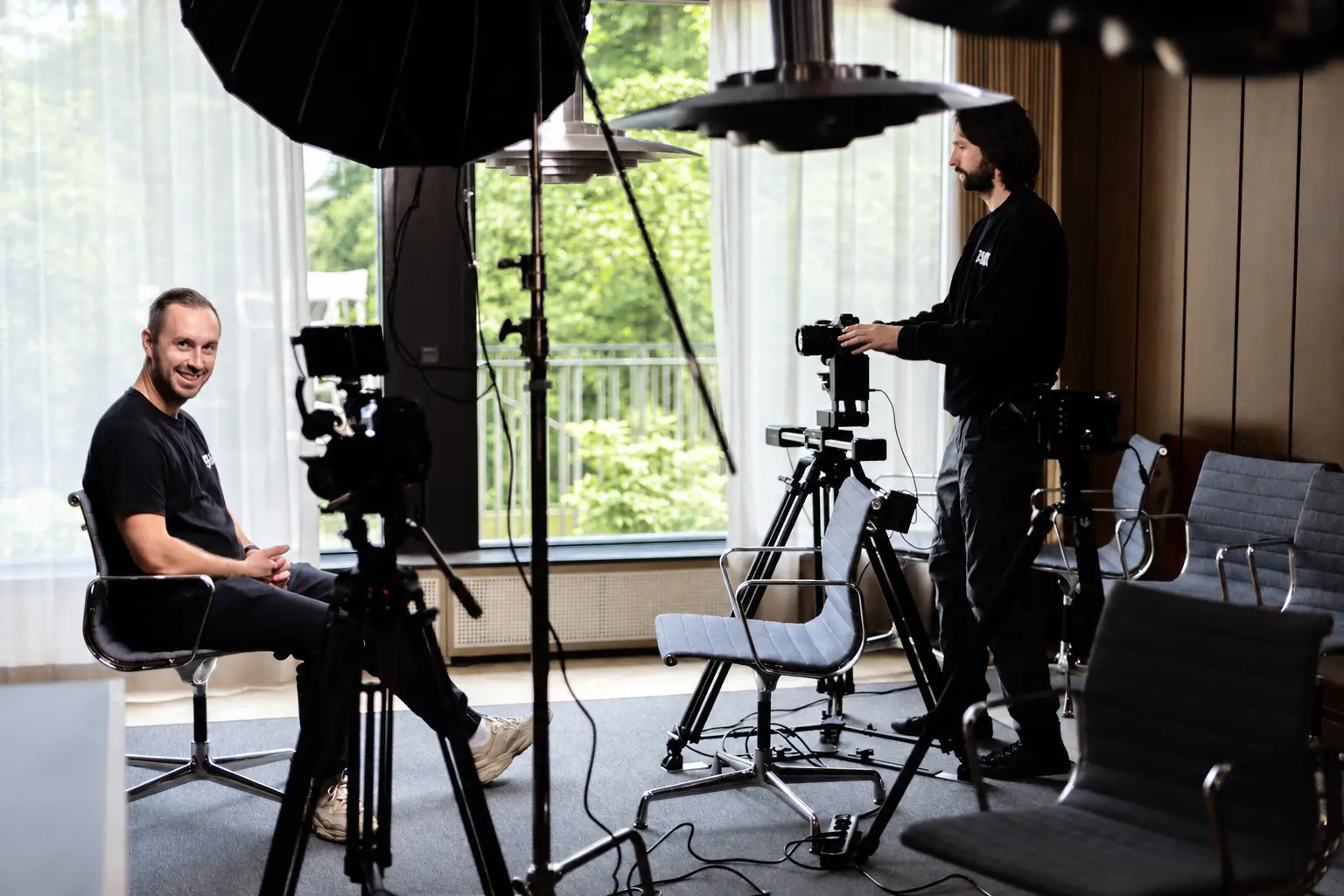
Modern offices are the worst possible rooms for it — glass walls, hard floors, exposed concrete, air handling that never switches off. A meeting room that sounds fine to the ear can be unusable on a recording. We record to at least two sources, a lavalier on the subject and a backup, so a cable problem or a rustle does not cost you the take.
If you are choosing the room yourself, pick the one with soft furnishings and fewest hard parallel surfaces, and tell us if the building has a ventilation system that cycles. That single piece of information saves an hour on the day.
What an interview day actually produces
This is where multi-camera pays for itself. The same day’s footage, cut properly, gives you:
- A hero film of two to three minutes for the website or a campaign landing page
- Vertical cutdowns for LinkedIn, where most B2B expert content actually gets watched
- Quote clips of fifteen to thirty seconds, subtitled, for sales and social
- Stills pulled from the shoot or taken alongside it, for press and the website
- Full transcripts, which are quietly one of the most useful outputs — they feed blog posts, case studies and web copy
Decide which of those you want before the shoot, not after. Vertical cutdowns need to be framed for on the day; recovering them later from a wide 16:9 master means cropping into the image and losing quality. The deliverables list is what shapes the shoot, which is the same principle behind how video production is priced in Copenhagen.
What changes by sector
The camera setup barely changes between industries. Everything around it does.
SaaS and tech
The recurring problem is that the product is invisible. A founder explaining a platform is a person talking about something the viewer cannot see, so the interview has to be planned alongside screen capture, product UI or office context that gives the words something to land on.
The second issue is pace of change. Tech companies rebrand, reposition and ship new UI faster than most video stays current, so we keep the footage modular — interviews that stand on their own, with product material layered separately and swappable later.
Legal and professional services
Here the film is selling judgement, so the production has to read as composed rather than energetic. Quieter framing, controlled light, no handheld movement. The lawyer should look like the person you would want in the room on a bad day.
The practical constraint is confidentiality. Client files, case names and screens are everywhere in a law office and none of them can appear in frame. We clear the background before rolling rather than fixing it in post, and we expect the final cut to go through a compliance read before it is published.
MedTech and life sciences
This is the sector where planning matters most and improvisation costs the most. Filming in or near production, cleanroom or laboratory environments brings gowning requirements, restricted equipment, escorted access and areas where nothing can be filmed at all.
On top of that sits the regulatory layer. Anything that could be read as a product claim is likely to need review, and the approval route is usually longer than the production itself. We build that into the timeline from the start rather than discovering it a week before launch.
The practical consequence is that medtech interviews are often framed around people and process rather than product claims — the engineer, the method, the problem being solved — which clears review faster and ages better.
Filming in Copenhagen when your team is somewhere else
A large share of the interview work we do is for companies whose marketing team is not in Denmark. The subject is here — a Danish office, a Nordic customer, a speaker at a conference — and the people commissioning the film are in London, Stockholm, Amsterdam or the US.
That works perfectly well, and nobody needs to fly. What makes it work is agreeing three things before the day: the question set, who has final say on the cut, and how review happens. We run approvals through timecoded review links so feedback lands as comments on specific frames rather than as a paragraph of description in an email.
Worth knowing if you are commissioning from outside Denmark: filming inside a private office or venue needs the owner’s permission rather than a city permit, so an interview shoot carries none of the lead time that street filming does. That changes entirely the moment you want exteriors — which we cover in filming in Copenhagen and in the practical guide to hiring a production crew in Denmark.
How to get more out of the day you are already paying for
- Film more than one person. The setup is already lit and rigged. A second and third interview on the same day costs far less than a second day.
- Record a podcast segment while you are set up. A two-camera interview rig is most of a pop-up podcast studio already.
- Shoot stills in the same session. Headshots and environmental portraits while the lighting is up, rather than booking a separate photographer later.
- Grab cutaways deliberately. Twenty minutes of considered B-roll at the end of the day is worth more than an hour of wandering.
- Ask for the transcript. It costs nothing extra and usually turns into three pieces of written content.
FAQ
Why film an interview with more than one camera?
So the edit can shorten answers without a visible jump cut. With a single camera, every trim has to be hidden behind B-roll or a dissolve. A second angle lets the editor cut cleanly between frames, which is why almost all professional interview content is shot on two or more cameras.
How long does a corporate interview shoot take?
Budget around ninety minutes for setup and lighting, thirty to sixty minutes of actual interview per person, and thirty minutes to strike. One subject is a comfortable half day. Three or four subjects fill a full day once the rig is up.
Can you film in a cleanroom or regulated medtech environment?
Yes, with planning. Those environments bring gowning requirements, equipment restrictions, escorted access and no-film zones, and anything resembling a product claim usually needs regulatory review. We build the approval route into the timeline from the start, because it is often longer than the production itself.
Do we need a permit to film an interview in Copenhagen?
Not for filming inside a private office, studio or venue — that needs the owner’s permission rather than a city permit. Permits apply to public streets, squares and parks, where applications take 10 to 20 working days and are made per location.
Can you film in Copenhagen if our marketing team is abroad?
Regularly, and nobody needs to fly. We agree the question set and the approval chain in advance and run review through timecoded links, so feedback lands on specific frames rather than in email descriptions. Much of our interview work is commissioned from outside Denmark.
What do we get out of a single interview day?
Typically a two to three minute hero film, several vertical cutdowns for LinkedIn, subtitled quote clips for sales and social, stills, and full transcripts. Decide the deliverables before the shoot — vertical framing in particular has to be planned on the day rather than cropped in afterwards.
Planning an interview shoot in Copenhagen?
Tell us who is on camera, where they are and what the film has to do. We will come back with a setup, a schedule and a clear quote — usually within 24 hours, wherever your team is based.
Related: Do case study videos work? · Hiring a production crew in Denmark · Video production cost in Copenhagen
{“@context”:”https://schema.org”,”@type”:”FAQPage”,”mainEntity”:[
{“@type”:”Question”,”name”:”Why film an interview with more than one camera?”,”acceptedAnswer”:{“@type”:”Answer”,”text”:”So the edit can shorten answers without a visible jump cut. With a single camera, every trim has to be hidden behind B-roll or a dissolve. A second angle lets the editor cut cleanly between frames, which is why almost all professional interview content is shot on two or more cameras.”}},
{“@type”:”Question”,”name”:”How long does a corporate interview shoot take?”,”acceptedAnswer”:{“@type”:”Answer”,”text”:”Budget around ninety minutes for setup and lighting, thirty to sixty minutes of actual interview per person, and thirty minutes to strike. One subject is a comfortable half day. Three or four subjects fill a full day once the rig is up.”}},
{“@type”:”Question”,”name”:”Can you film in a cleanroom or regulated medtech environment?”,”acceptedAnswer”:{“@type”:”Answer”,”text”:”Yes, with planning. Those environments bring gowning requirements, equipment restrictions, escorted access and no-film zones, and anything resembling a product claim usually needs regulatory review. We build the approval route into the timeline from the start, because it is often longer than the production itself.”}},
{“@type”:”Question”,”name”:”Do we need a permit to film an interview in Copenhagen?”,”acceptedAnswer”:{“@type”:”Answer”,”text”:”Not for filming inside a private office, studio or venue, which needs the owner’s permission rather than a city permit. Permits apply to public streets, squares and parks, where applications take 10 to 20 working days and are made per location.”}},
{“@type”:”Question”,”name”:”Can you film in Copenhagen if our marketing team is abroad?”,”acceptedAnswer”:{“@type”:”Answer”,”text”:”Regularly, and nobody needs to fly. We agree the question set and the approval chain in advance and run review through timecoded links, so feedback lands on specific frames rather than in email descriptions. Much of our interview work is commissioned from outside Denmark.”}},
{“@type”:”Question”,”name”:”What do we get out of a single interview day?”,”acceptedAnswer”:{“@type”:”Answer”,”text”:”Typically a two to three minute hero film, several vertical cutdowns for LinkedIn, subtitled quote clips for sales and social, stills, and full transcripts. Decide the deliverables before the shoot, because vertical framing in particular has to be planned on the day rather than cropped in afterwards.”}}
]}

Roland Varsbergs
Rolands Varsbergs is the founder and Creative Director of 5 ALIVE MEDIA — a Copenhagen-based video production and photography agency. With 8+ years of production experience, he has directed and produced commercial films, event coverage and brand content for Google, Honda, Visit Denmark, TED and 100+ brands across Denmark and internationally. A certified drone pilot and Director of Photography, Rolands leads productions ranging from single-day corporate shoots to multi-day international events and studio commercial films.
Leave a Reply