

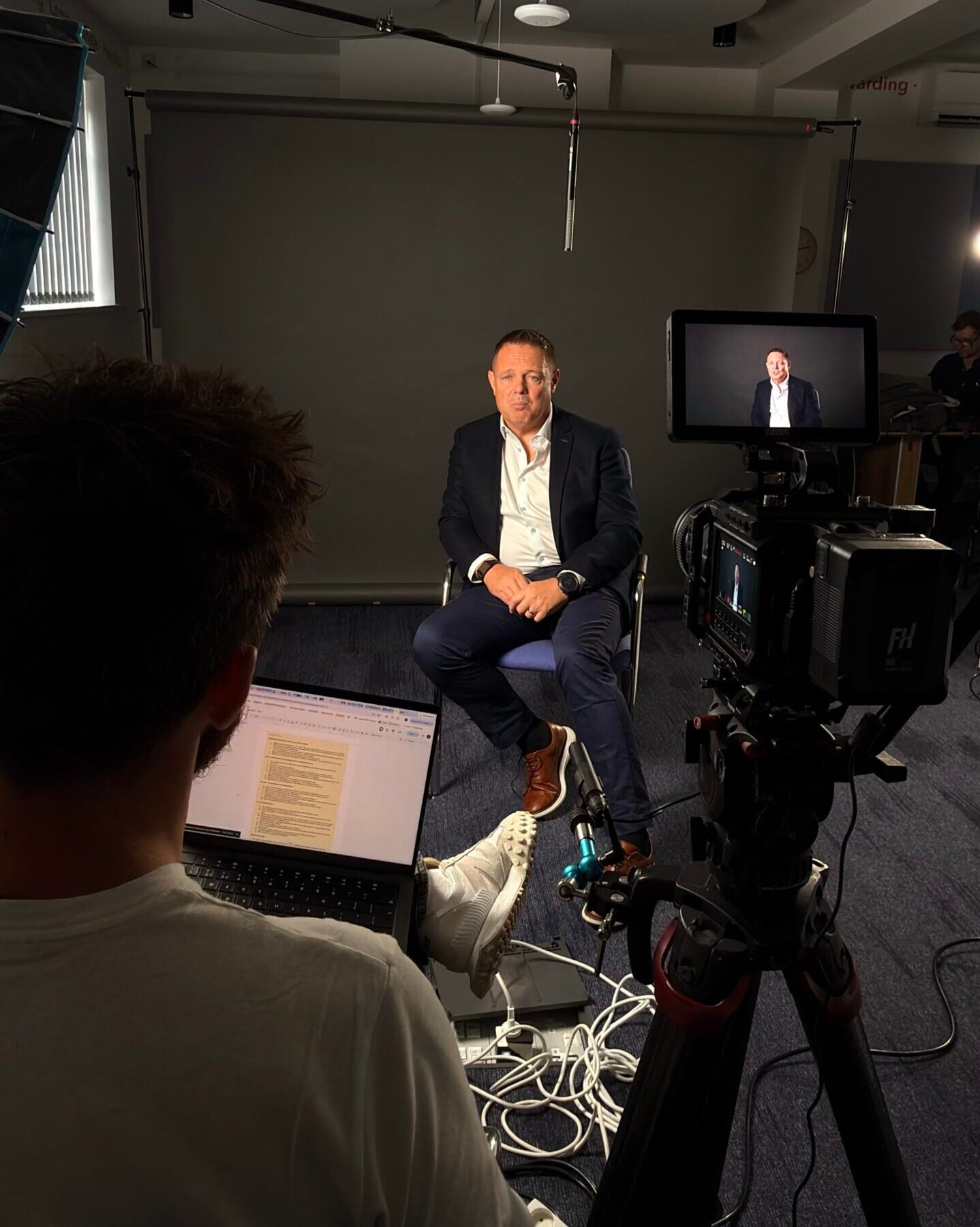
Film Crew Day Rates in Copenhagen: What a Production Day Actually Costs
Crew rates in Denmark are not a secret. They are just never written down anywhere you can find them.
Ask three production companies what a shoot day costs and you will get three quotes with no breakdown, which makes them impossible to compare. This is the breakdown — what each role on a Copenhagen crew actually adds to a day, what a “day” means here, and why the crew line is never the whole number.
The figures below are indicative starting points for planning, not a price list. Every production gets a real quote.
The short version
- A shoot day in Denmark is 10 hours including setup and wrap, not 10 hours of rolling
- Crew is the biggest single lever on cost, and the one most worth interrogating in a quote
- A typical corporate day runs three to four people, not six
- Equipment, preparation and post-production sit outside the crew line
- Half days exist but rarely save half the money
What a shoot day means in Denmark
Before any number means anything, you need to know what you are buying. A standard Danish production day is 10 hours from crew call to wrap. That includes getting the kit into the building, setting up, lighting the space, shooting, striking the set and loading out.
On an interview day, the actual rolling time might be ninety minutes of that. The rest is the part that makes those ninety minutes look the way they do. This is the single biggest misunderstanding in production budgeting, and it is why hourly pricing stops making sense the moment a project involves more than one camera.
Half days exist, usually capped around four or five hours. They rarely cost half, because the kit still has to be packed, transported, set up and struck either way.
What each role adds to a day
Indicative starting points for a full day in Copenhagen. Read them as “from”, not “is” — the number moves with the production.
| Role | From, per day | When you need it |
|---|---|---|
| Director / producer | From 7,000 DKK | Any day with talent, a script or a client on set |
| DOP / lead camera operator | From 7,500 DKK | Every production — this is the irreducible one |
| Second camera operator | From 6,500 DKK | Multi-camera interviews, stage coverage, one-take moments |
| Sound recordist | From 6,500 DKK | Interviews, panels, anything where words matter |
| Gaffer / lighting | From 6,500 DKK | Controlled interviews and commercials; rarely for events |
| Camera assistant | From 4,500 DKK | Multi-setup days, heavy kit, tight schedules |
| Certified drone operator | From 8,000 DKK | Half-day aerial add-on, permits handled |
| Editor | Per deliverable | Priced by what is delivered, not by the day |
Indicative starting points for planning a Copenhagen production, excl. VAT. Actual rates move with experience level, production scale, schedule and specialist kit. Every project is quoted properly.
Why editors are not priced by the day
Every other role on that list is tied to a fixed block of time in a specific place. Editing is not. A hero film with six social cutdowns and three subtitled versions takes what it takes, and that depends on the footage, the number of approval rounds and how clearly the deliverables were defined before the shoot.
Pricing post per deliverable rather than per day protects you. You know what you are getting for the number, and a slow revision round is not suddenly your problem. If someone quotes you editing as a day rate, ask how many days and what happens if it runs over.
What a real crew actually looks like
Adding the whole table together gives you a number nobody would ever quote, because almost no production needs every role. Danish crews run leaner than UK or US equivalents for the same output, partly because operators here routinely cover more than one job.
- Single interview, one location. One operator handling camera and audio. Occasionally two if the turnaround is tight.
- Corporate or testimonial day. Three people — director/producer, DOP, and either sound or an assistant depending on whether it is talking heads or coverage.
- Conference or event. Two to four, scaling with the number of rooms and whether stage recording runs in parallel with roaming coverage.
- Commercial with talent. Four to six, where lighting and sound each need a dedicated person and the director is not also operating.
A corporate interview day that would carry six people in London is commonly three or four here, and the work still gets done. If a quote proposes six people for a two-person job, ask what each of them is doing.
What sits outside the crew line
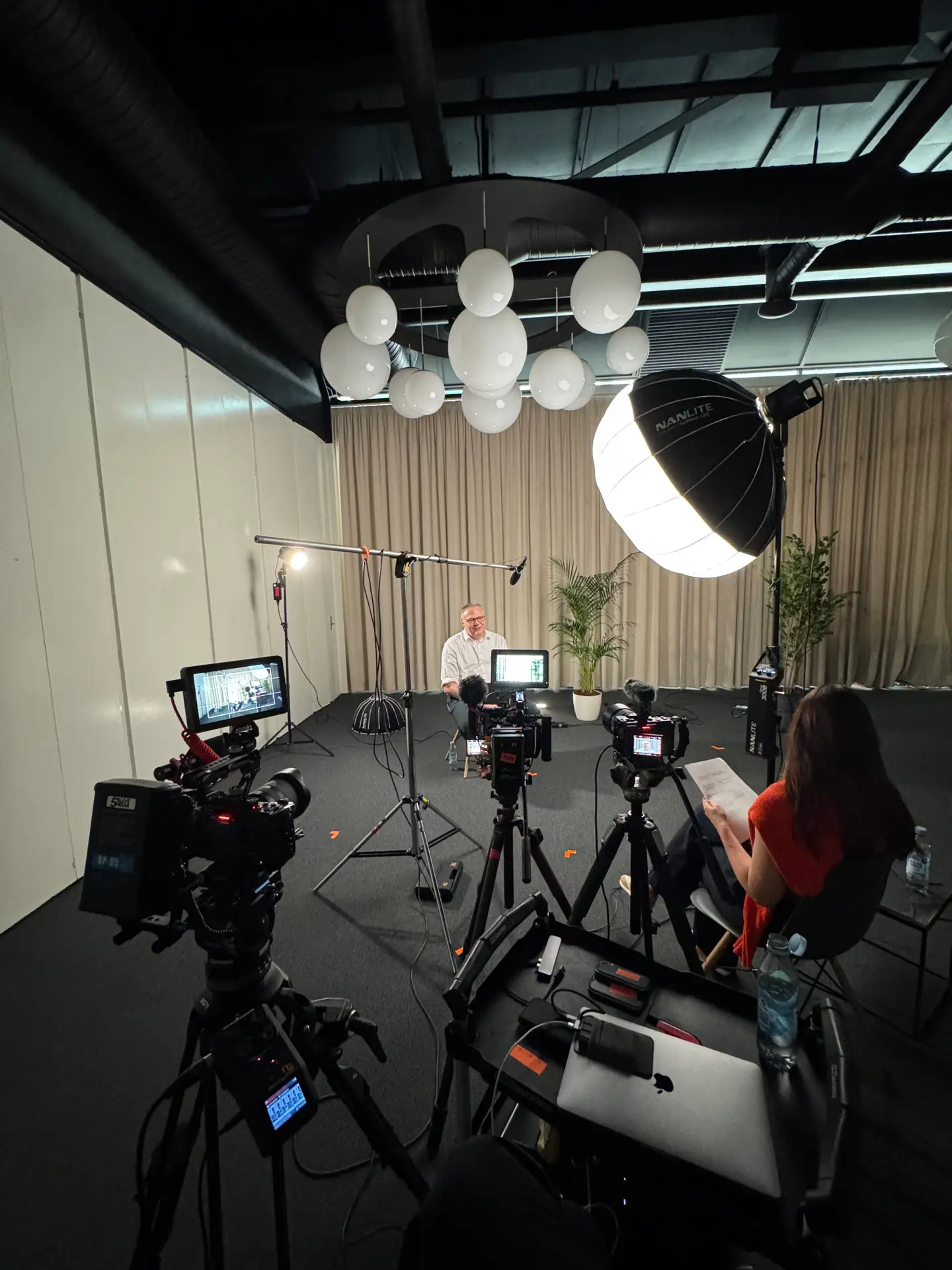
This is where quotes diverge most, and where the cheap one usually turns out not to be. Crew is people. A production also needs:
- Equipment. Cameras, lenses, audio, lighting, grip and support. Some companies include it, some hire it on top. Always ask which.
- Pre-production. The brief, the shot list, the schedule, the venue walk-through. Invisible on the day and the reason the day works.
- Post-production. Edit, colour, sound, graphics, subtitles, versioning. Usually the longest phase of the project.
- Permits and insurance. Filming on public ground in Copenhagen needs a permit per location, and most venues want proof of liability cover before a crew gets in.
- Travel. For a shoot in Aarhus or Odense, a Copenhagen crew’s travel time appears somewhere. Better in the quote than on the invoice.
Adding the table up does not give you a production price. Those figures are what it costs to put one role on a day on its own. A booked production is priced as a package, and the effective rate per role drops once the whole day is ours to plan, schedule and crew — which is why our project fees start well below the sum of the individual parts. This is why a full production is quoted as a project fee rather than a stack of day rates. The crew line tells you who is in the room. The project fee tells you what you end up with. We set out the full ranges in our guide to video production cost in Copenhagen.
What moves a rate up
- Overtime. Past the ten-hour day, hours are charged at a premium. Build the schedule honestly rather than discovering this at 19:00.
- Short notice. A booking made three days out costs more than one made three weeks out, because it displaces other work.
- Weekends and public holidays. Denmark has more public holidays than most markets expect, and they land mid-week.
- Specialist skills. Certified drone operation, underwater, high-speed, live multi-camera switching.
- Time of year. December gives Copenhagen around seven hours of daylight, so winter exteriors need more lighting and tighter scheduling than the same shoot in June.
One local note worth planning around: July is quiet. Much of Denmark takes three weeks off from late June, availability thins and venues run reduced staff.
FAQ
What is a typical film crew day rate in Copenhagen?
As a planning figure, individual roles start from around 4,500 to 7,500 DKK per day depending on the position, with a lead camera operator at the higher end and an assistant at the lower. Most productions are quoted as a project fee rather than a stack of day rates, because equipment, preparation and post-production sit outside the crew line.
How long is a shoot day in Denmark?
Ten hours from crew call to wrap, including setup and strike. Actual rolling time is usually a fraction of that. Half days are typically capped around four or five hours and rarely cost half, because the kit still has to be packed, moved and set up.
How many people do I actually need on a corporate shoot?
Usually three. A director or producer running the day, a DOP on camera, and either a sound recordist or an assistant depending on whether the day is interviews or coverage. A day that would carry six people in London is commonly three or four in Copenhagen.
Is equipment included in the day rate?
It depends on the supplier, which is why it is worth asking directly. Our quotes include cameras, lenses, audio, lighting and support as standard, with specialist items such as drone or multi-camera stage recording listed separately so you can see what they cost.
Why is editing not quoted as a day rate?
Because the work is defined by what gets delivered, not by hours in a room. A hero film with social cutdowns and subtitled versions takes what it takes. Pricing per deliverable means you know what the number buys, and an extra revision round does not become your problem.
Do rates change for weekends or short notice?
Yes. Weekends, public holidays, overtime beyond the ten-hour day and bookings made at short notice all carry a premium, because they displace other work. Denmark also has more mid-week public holidays than most markets expect, so it is worth checking the calendar early.
Planning a production in Copenhagen?
Tell us the dates, the locations and what you need delivered, and we will come back with a clear project fee rather than a stack of day rates. Usually within 24 hours.
Related: Hiring a production crew in Denmark · Video production cost in Copenhagen · Filming in Copenhagen: permits and locations

Roland Varsbergs
Rolands Varsbergs is the founder and Creative Director of 5 ALIVE MEDIA — a Copenhagen-based video production and photography agency. With 8+ years of production experience, he has directed and produced commercial films, event coverage and brand content for Google, Honda, Visit Denmark, TED and 100+ brands across Denmark and internationally. A certified drone pilot and Director of Photography, Rolands leads productions ranging from single-day corporate shoots to multi-day international events and studio commercial films.
Leave a Reply